Try the distinctions
The handover game
Choose the work needed to deliver an accepted installation. Discover why a finished product alone does not reveal all the work.
Play the game →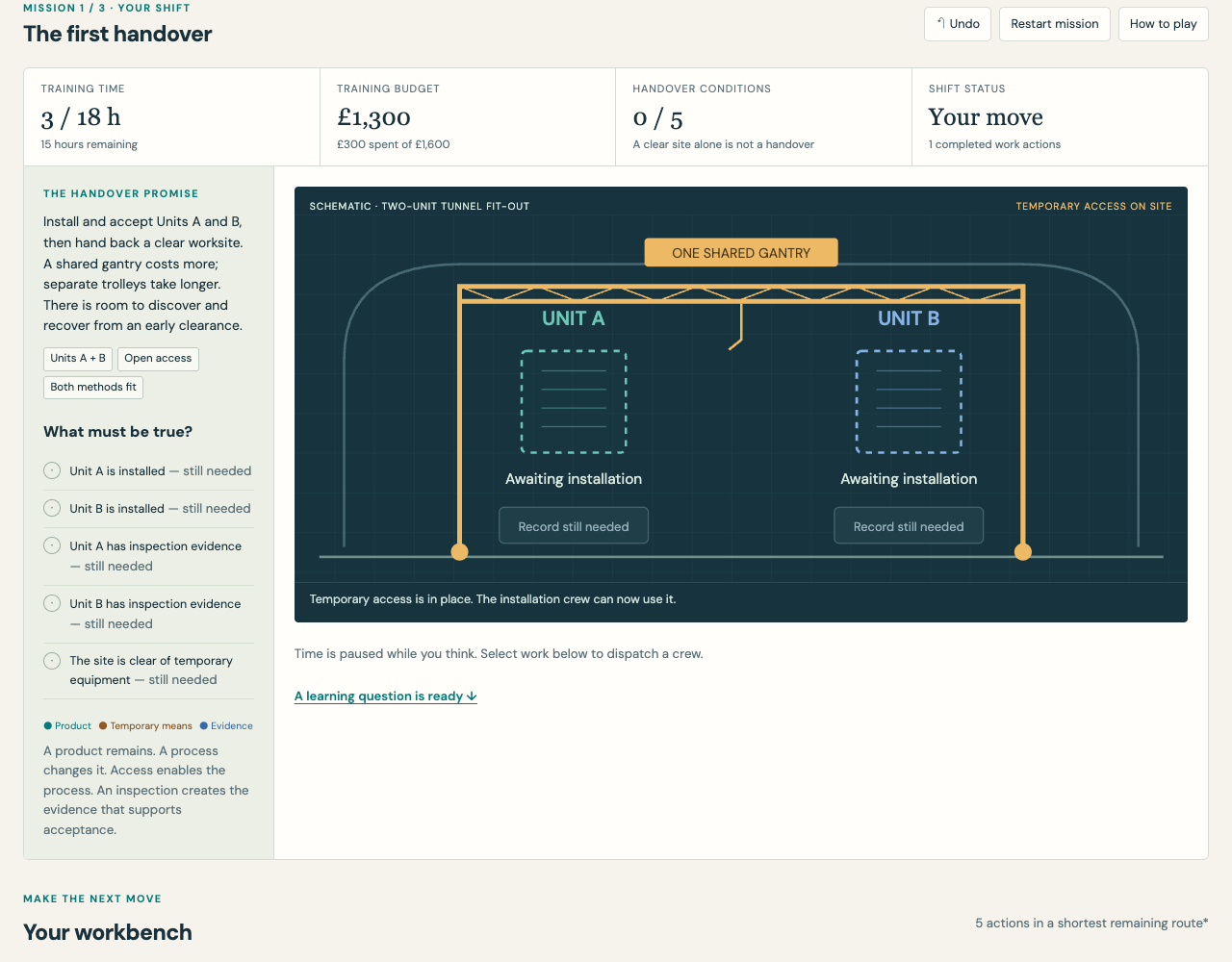
Semantic project planning
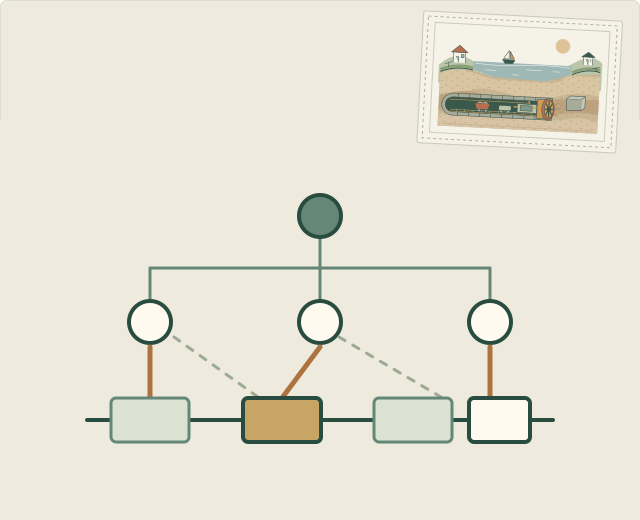
A synthetic tunnel fit-out needs installed equipment, temporary access and acceptance evidence. Can we explain the work a goal requires by distinguishing products, processes, temporary means and evidence?
Try the distinctions
Choose the work needed to deliver an accepted installation. Discover why a finished product alone does not reveal all the work.
Play the game →Inspect the construction
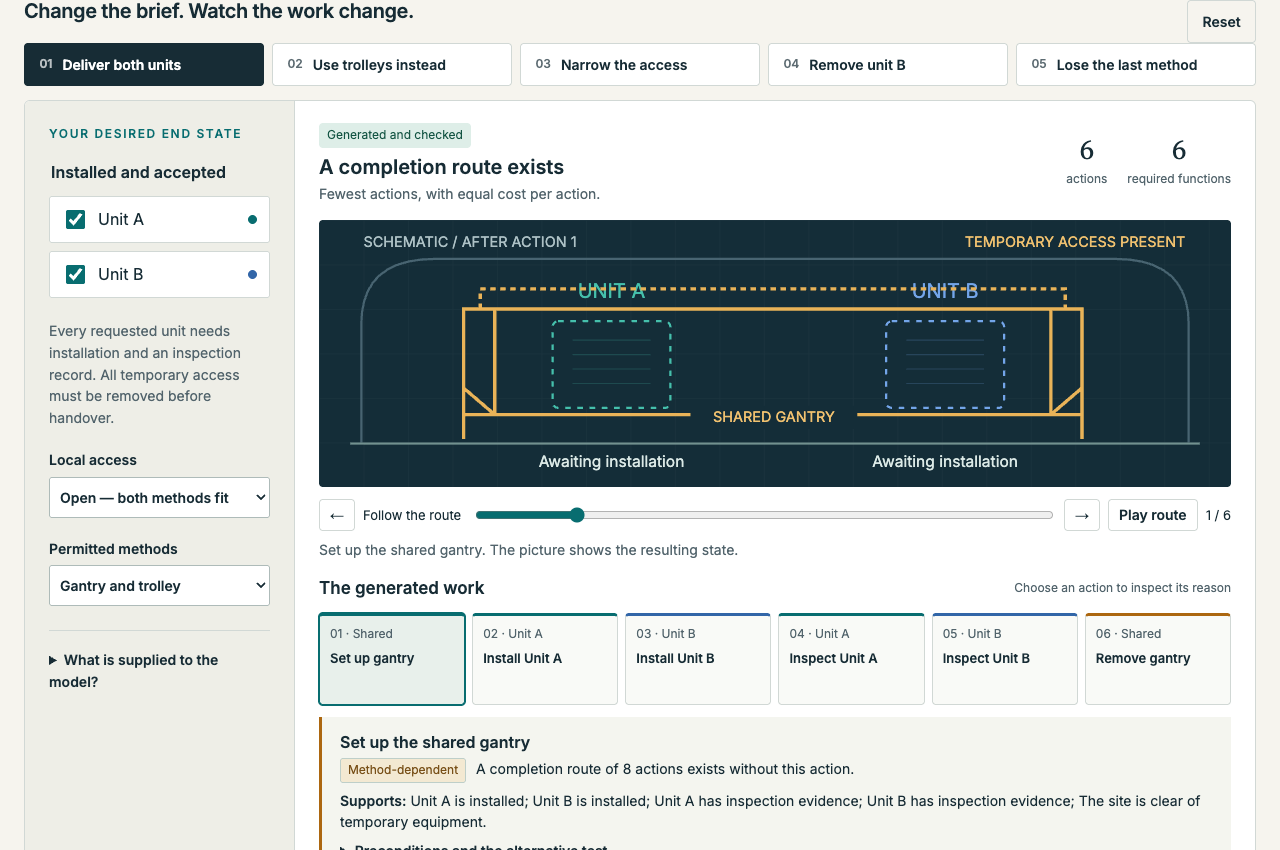
Start with Deliver both units, then untick Unit B in the brief. Which temporary work still serves unit A?
Change scope, access or methods. Follow shared work and causal support, try two work breakdowns, and compare ontology with executable PDDL.
Toy scenario
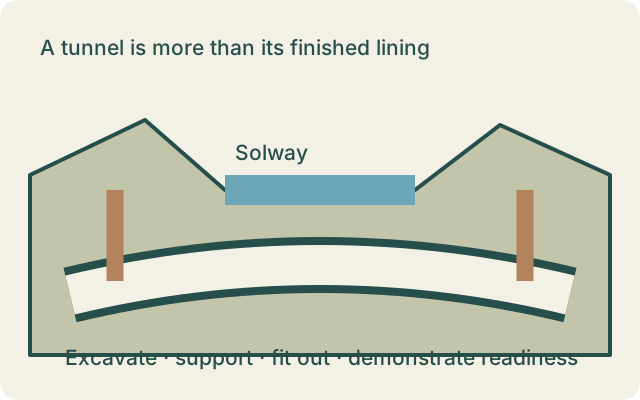
A finished tunnel needs more than permanent lining: excavation, temporary access and support, installed systems, inspections and evidence all play different roles. Smaller installation examples let us test those distinctions without pretending to engineer the whole tunnel.
Can a description of the desired result explain the work needed to achieve it?
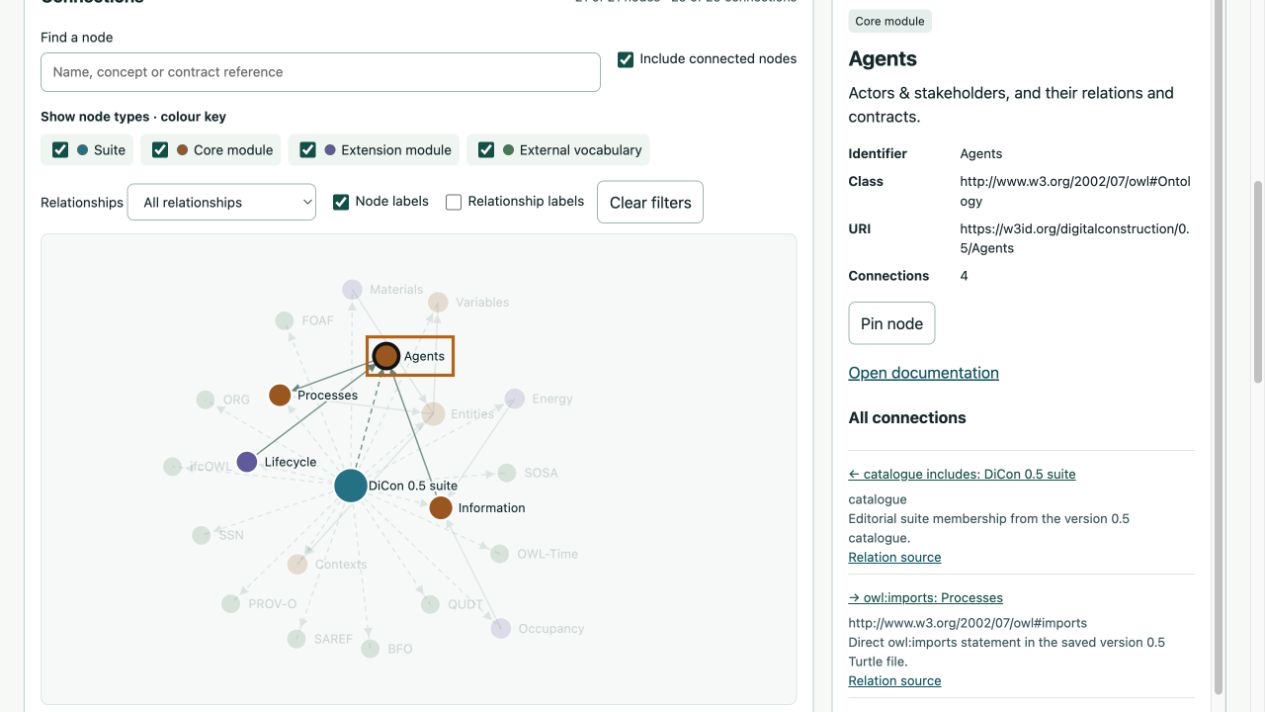
Early essai · Inspect the vocabulary
Explore Digital Construction terms, a Tokyo stadium model and an HS2 roles snapshot. Ask what else is needed before a project description can explain required work.
Open the early essai →The broader tunnel ontology remains available for exploration. The app collection includes separate investigations of temporal relations, local-to-global construction and ontology auditing.
The tunnel planning experiments are synthetic. The early ontology essai retains separately labelled Tokyo and HS2 project models. Model checks establish results within declared assumptions; they do not establish an engineered tunnel design, empirical verification of those models or practitioner validation.