A first version of every use case in Lawrence’s original outline, brought together in one fictional railway. Each is an attempt to make a useful distinction consequential in something a person can try.
A shared situation gives the questions somewhere concrete to land.
What we were trying to do
The June 2025 outline brought together 32 possible interventions across project, programme and portfolio management. The End is practical: better decisions, clearer relationships, useful learning, less avoidable work and more reliable use of evidence. Its suggested return was a reason to investigate, not measured proof.
This essai translates each intention into a public first version with invented records, a meaningful action, an inspectable output and explicit limits. The source organisational document remains private. Bracken Vale owns infrastructure; its passenger and freight operators are separate. The setting supplies a concrete example, not engineering authority.
Essai 01 is complete under the agreed first-version rule: all 32 are present. That does not complete the wider ambition of every use case. Live AI, authenticated collaboration, real evidence and demonstrated human benefit remain separate questions. The tools say which functions they provide.
Why these forms?
The mechanism follows the job. A relationship graph preserves the kind of connection. A stock-flow account makes accumulation and delay explicit. A decision policy acts on information available at that point. A versioned evidence record stops a current-looking draft from silently relying on an earlier source. Several tools are best understood as careful tables with a useful picture alongside.
The deeper test is whether the added structure helps someone notice, decide or do something worthwhile after counting preparation, checking and maintenance. A complex interface can be worse than an ordinary checklist. Completing the set creates things to compare; it does not oblige us to preserve every mechanism as a product.
The 32 constructions
This is one collection, in the order of the original outline. Each entry names the concept doing work, the particular construction and what that first version leaves unresolved.
The concept. Keep the claim attached to its passage and version.
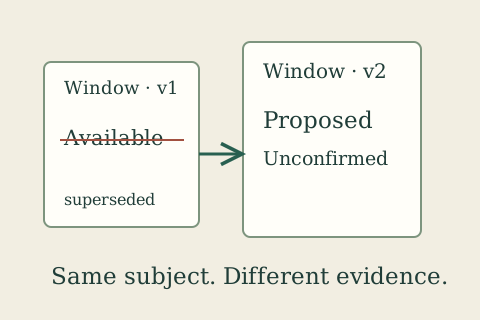
The construction. Local word search, retained source snapshots and a register expose missing evidence and contradictory accounts.
Compare with: A searchable document register with version and conflict columns. Still open: Live evidence-grounded AI retrieval and answers over a real, maintained corpus remain open.
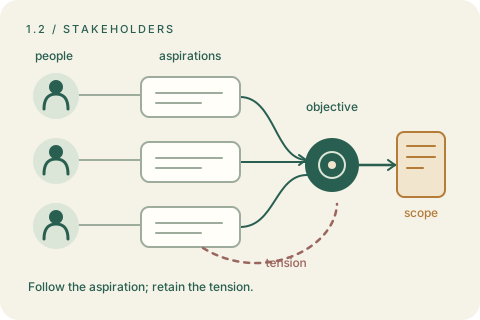
The concept. A stakeholder aspiration, an objective and a proposed task are different kinds of thing.
The construction. Typed paths and separate contribution/tension totals let the reader inspect a judgement without cancelling a concern.
Compare with: An aspiration–objective–scope matrix. Still open: The weights are workshop judgements. Shared stewardship and evidence of useful decisions remain untested.
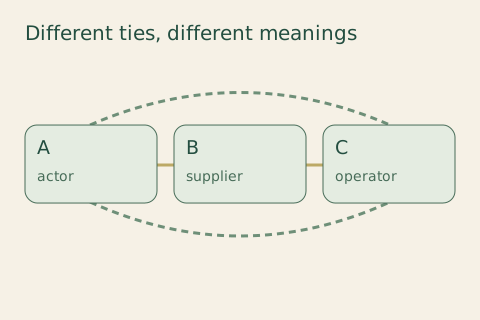
The concept. A multilayer network preserves the meaning and provenance of different relationships.
The construction. Four typed edge layers project two declared project neighbourhoods while keeping isolated actors, source dates and confirmation states.
Compare with: A relationship register with typed connections and source notes. Still open: Real evidence stewardship, attribution and usefulness remain untested; a plotted position is not influence.
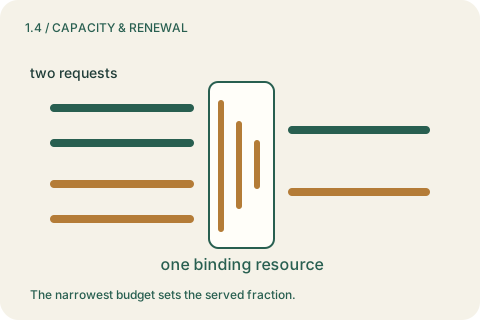
The concept. A shared served fraction is the smallest resource-budget-to-load ratio. Investment only helps throughput when it eases a binding resource.
The construction. Five independent resource constraints, a delayed capital/renewal programme, separate passenger and freight flows, and an explicit infrastructure-only cash ledger.
Compare with: A resource-budget spreadsheet with explicit commissioning dates. Still open: The resource budgets and coefficients are invented. This is neither an executable timetable nor a validated investment appraisal.
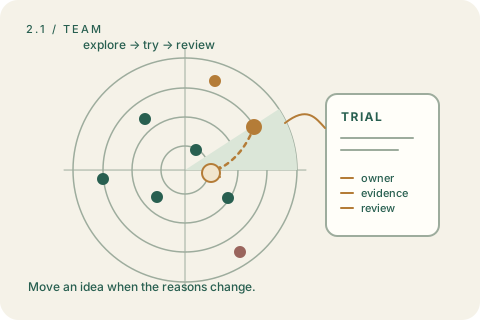
The concept. Adoption is a reasoned change in position, not a label alone.
The construction. Two viewpoints, evidence notes and dated history preserve the account of each trial.
Compare with: A trial register with an owner, evidence and review date. Still open: The records do not authenticate participation or establish that an adoption choice is worthwhile.
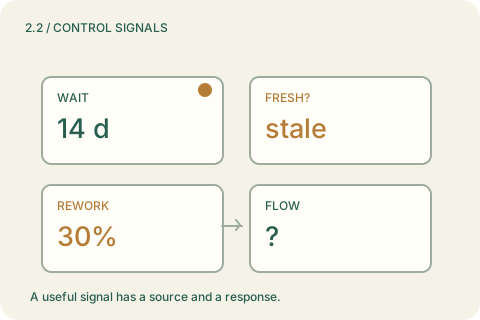
The concept. A control signal is a traceable calculation plus a threshold, freshness boundary and feedback about its use.
The construction. Six source-linked tiles, three independent role boards, editable thresholds and dated source records, with preserved dismissal and action-feedback logs.
Compare with: A short control sheet with dated source fields. Still open: The signal definitions and thresholds are local assumptions; useful warning performance remains unmeasured.
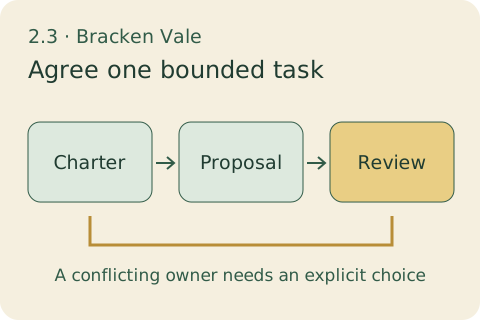
The concept. A bounded micro-project has a problem, output, owner and acceptance test; proposals remain proposals until a person accepts them.
The construction. Three invented briefs, immutable charter snapshots, human task acceptance and three-way field merge with preserved decisions.
Compare with: A shared charter, task board and documented change discussion. Still open: Live AI co-creation, authenticated simultaneous collaboration and trusted attribution remain open.
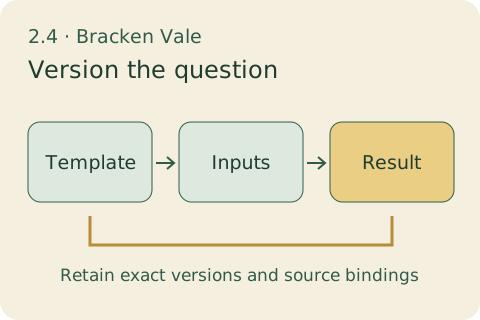
The concept. A prompt is a versioned experiment: template, inputs, output and judgement belong together.
The construction. Immutable prompt/input snapshots, required-variable binding, explicit output attachment and a three-part review rubric.
Compare with: A prompt folder with versioned briefs and evaluation notes. Still open: In-app live AI execution and independent evidence of reliable prompt reuse remain open.
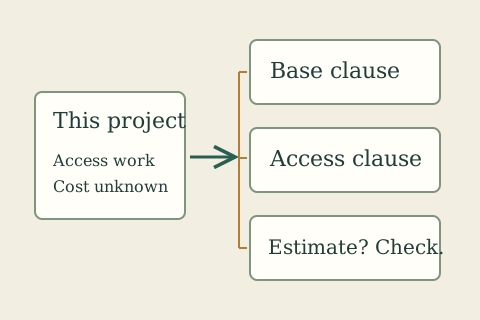
The concept. Applicability is a question about context; a source being present is a different question.
The construction. Four explicit rules retain uncertain obligations and lead to a source-linked review checklist.
Compare with: A tailoring checklist with clause references and review notes. Still open: The rule vocabulary is small and invented. Real framework coverage and evidence adequacy are not established.
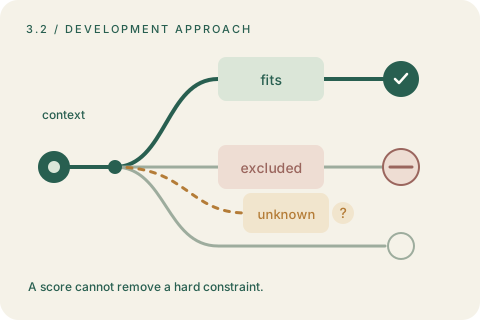
The concept. A preference score cannot override a hard exclusion.
The construction. Four options are screened for constraints before ranking; unknowns, ties and sensitivity remain visible.
Compare with: A weighted options table with a separate exclusions checklist. Still open: Scores express chosen priorities; the invented constraints are not an approved procurement or engineering framework.
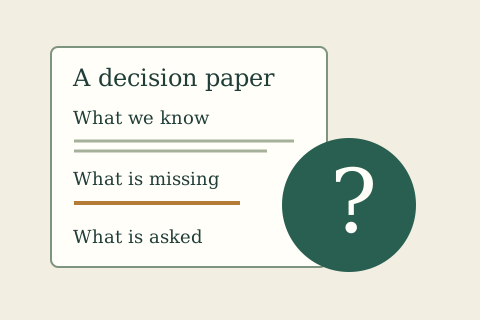
The concept. A meeting paper organises a decision and its supporting evidence.
The construction. Template assembly and a separate recorded AI example preserve source snapshots; later changes make reviews stale.
Compare with: A meeting template with cited evidence and a human editor. Still open: Live AI drafting, prior-action feeds, circulation and measured preparation/checking savings remain open.
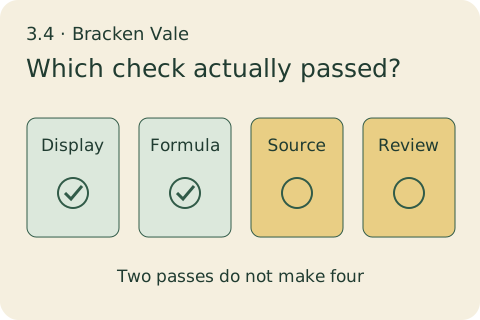
The concept. A display check, a formula test, a source judgement and an independent review answer different questions.
The construction. Six blind candidates, known counterexamples, exact test/rubric snapshot keys and separate human review records.
Compare with: A task-specific review rubric and evidence log. Still open: This evaluates supplied outputs on specific cases. It cannot support a universal model ranking or authenticated independent review.
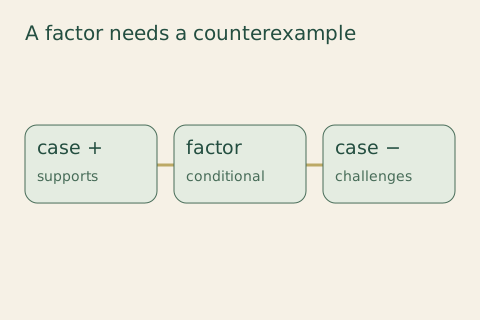
The concept. A transferable factor is a conditional hypothesis supported and limited by case context.
The construction. A curated eight-case corpus links four factors to supporting and contradictory paragraphs; local applicability judgements retain their target-context snapshot.
Compare with: A case library with context and transferability notes. Still open: The cases illustrate the evidence-handling method; they provide no empirical proof of infrastructure success factors.
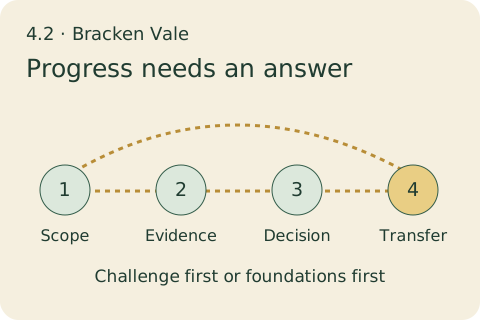
The concept. Learning progress needs evidence of changed judgement, not visits to a lesson.
The construction. Four source-linked cases, structured answer checks, rationale citation checks, differing entry routes and retained attempts.
Compare with: Case exercises with an answer guide and a learning log. Still open: Live conversational coaching grounded in an approved archive and evidence of learning transfer remain open.
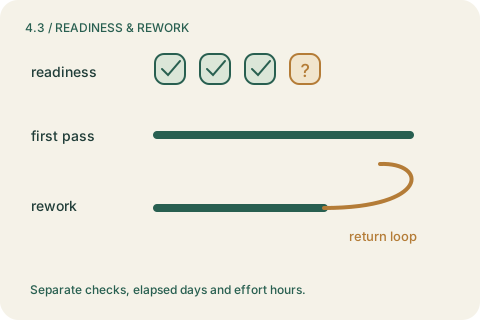
The concept. Readiness, first-pass acceptance, calendar duration and rework effort answer different questions; one cannot stand in for another.
The construction. Eight work-package event logs, exact-ID deduplication, open-case censoring, cohort filters and an empirical quartile range with source records.
Compare with: A work-package event log and reference-class spreadsheet. Still open: Synthetic event logs cannot establish real estimation performance or explain the causes of delay.
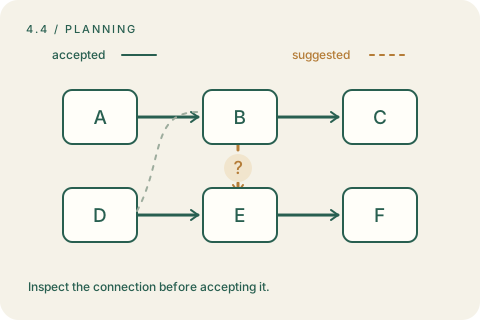
The concept. A proposed dependency is not an accepted constraint.
The construction. A candidate queue exposes supporting rules and cycle consequences before an explicit acceptance or rejection.
Compare with: A predecessor table and a planner’s review. Still open: Authored rules expose some candidate dependencies; general AI discovery and complete scheduling remain open.
The concept. A state differs from the reason it is permissible to enter that state.
The construction. Guarded transitions display missing conditions and retain a simulated decision history.
Compare with: A stage checklist with a decision log. Still open: Evidence notes are assertions. A simulated status change confers no authority to work on infrastructure.
The concept. A schema is a hypothesis grounded in observed values, nulls and relationships.
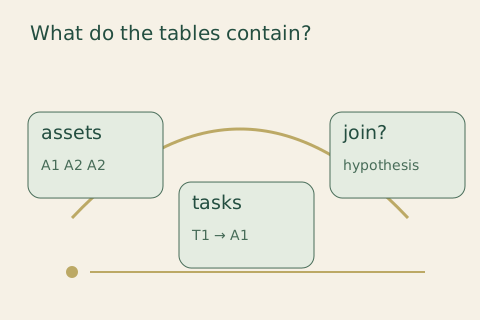
The construction. A quoted-field CSV parser and flat JSON parser infer column types, completeness and observed uniqueness; overlap proposes joins for explicit review.
Compare with: A data dictionary built from sampled tables and explicit checks. Still open: Inferred types and candidate joins do not establish business meaning. Database connections are outside this local profiler.
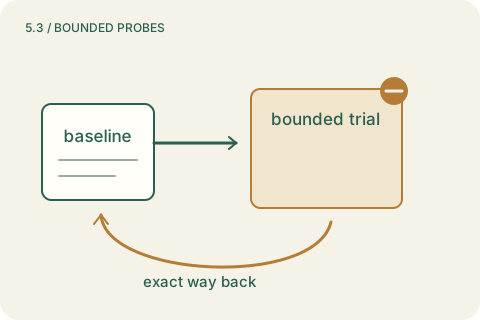
The concept. A probe needs a hypothesis, a bounded change, observable stopping conditions and an owned fallback before it begins.
The construction. Versioned charter snapshots, four separately unit-labelled configuration changes, cumulative observations, automatic local stop detection and exact baseline restoration.
Compare with: An experiment charter with a versioned baseline and stop rules. Still open: This is a bounded office-process exercise. Its fallback simulation is not an operational recovery plan.
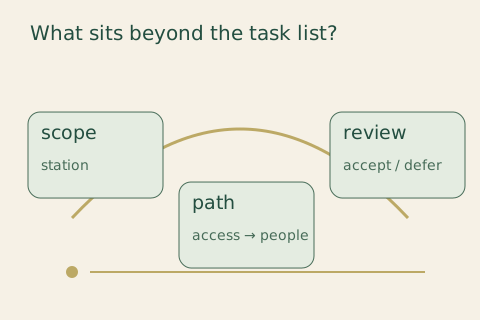
The concept. A domain vocabulary can expose neglected interfaces without deciding scope on its own.
The construction. Bounded typed traversal connects declared scope to contextual factors, retaining every rule path and version-specific judgement.
Compare with: A context checklist with reasons for inclusion and exclusion. Still open: Typed traversal is not a complete industry ontology, a formal reasoner or a proof of scope completeness.
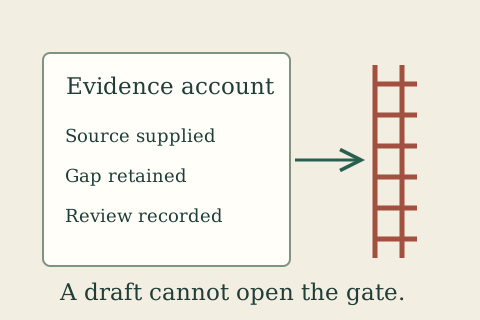
The concept. A gate paper accounts for support and gaps; a completed document is not an approval.
The construction. Two invented templates, source-linked sections and local review keep absent evidence visible.
Compare with: A gateway template and an evidence-coverage checklist. Still open: Live AI drafting and independently validated evidence review remain open. Approval stays outside this drafting tool; local review cannot advance a gate.
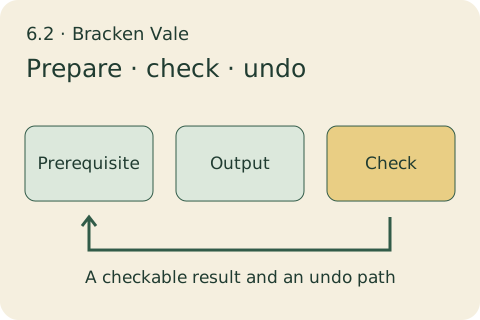
The concept. Adoption needs a small task, known prerequisites, a checkable result and an undo path.
The construction. Two office tasks, two platform handoffs, explicit prerequisites, deterministic fixture outputs and answer-based verification.
Compare with: A short tutorial plus a verified-output checklist. Still open: The page cannot inspect or execute work in an office tenant. External execution needs the appropriate authorised integration.
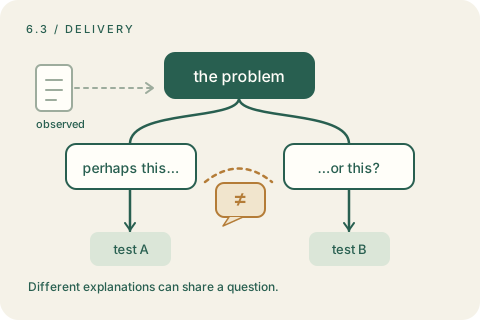
The concept. An explanation of a problem is not evidence that the explanation is true.
The construction. Typed observations, hypotheses and interventions preserve disagreement across two views.
Compare with: A workshop cause-and-intervention table with comments. Still open: Local facilitation and file exchange do not provide simultaneous collaboration or causal inference.
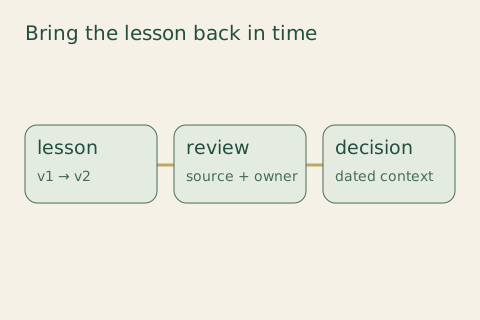
The concept. A lesson becomes useful when it returns in a relevant context before a decision, with ownership and evidence.
The construction. Thirty authored lessons retain version histories and source passages. Stage/tag matching builds milestone queues, and review records bind a lesson version to a milestone.
Compare with: A tagged lesson register reviewed against milestone dates. Still open: Live AI lesson review, authenticated team capture and closed-browser notifications remain open.
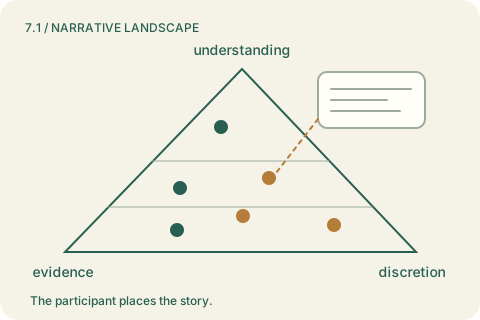
The concept. Barycentric coordinates describe a relative three-way emphasis while keeping a participant’s own narrative attached.
The construction. A labelled triangular plot, native range and numeric placement controls sharing one normalization rule, explicit unpositioned accounts and cohort centroids with counts.
Compare with: A facilitated narrative discussion with explicit participant ratings. Still open: Participant positions are explicit judgements, not psychological measurements or inferred dispositions.
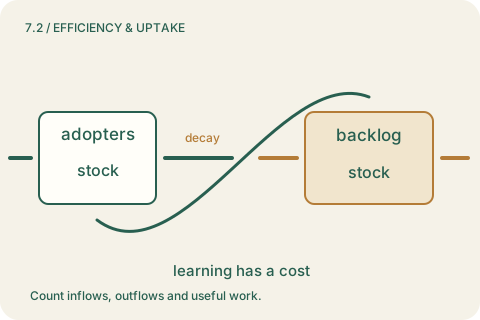
The concept. Stocks carry history: adopters accumulate joins minus decay, and backlog accumulates arrivals minus completed work.
The construction. Four office-team stock-flow models with disjoint task/rework effort, bounded adoption, learning and support costs, and a separate recorded-observation ledger.
Compare with: An adoption and workload spreadsheet with separate cost accounts. Still open: The stock-flow coefficients and uplift are assumed. No real time saving, adoption or service improvement is established.
The concept. A polished statement and a plausible chart can both be wrong when their evidence or denominator changes.
The construction. Editable document/table, exact duplicate detection, distinct-task denominators, record-level explanations and substantive completion checks.
Compare with: A worked editing exercise with a data-check answer sheet. Still open: Practice checks apply only to this exercise. Cross-application coaching and live contextual AI remain open.
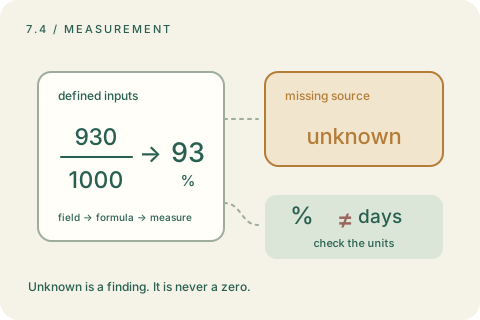
The concept. A formula input, an aggregation and a causal hypothesis are different relationships.
The construction. Explicit definitions expose unknown observations, incompatible units and mismatched denominators.
Compare with: A KPI dictionary with formula and relationship columns. Still open: The schema exposes assumptions; an arrow does not perform an aggregation or establish causal influence.
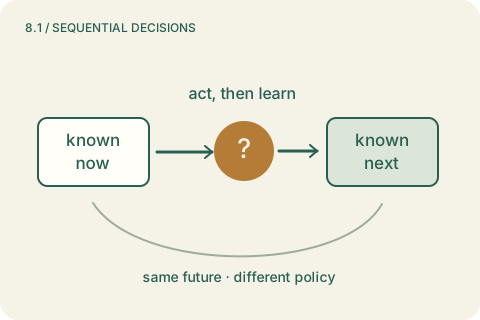
The concept. Powell’s five elements separate what is known now, the action, new information, the state transition and the objective.
The construction. A finite-horizon belief-state model with budget/window constraints, noisy Bayesian inspection, action-independent random tapes and paired comparisons of three declared policies.
Compare with: A small decision tree and scenario comparison. Still open: Policies are supplied, not learned or proved optimal. The scenario is invented and cannot determine safe real-world action.
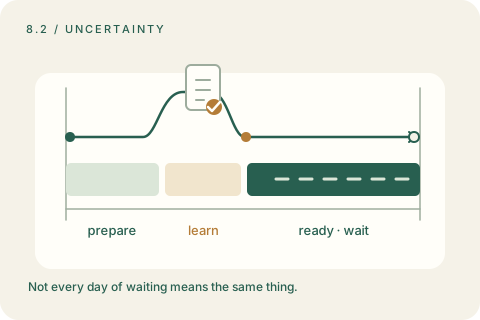
The concept. Waiting can be preparation, deliberate information gathering or time ready to decide.
The construction. Dated records partition elapsed time and retain unknown readiness instead of inventing a diagnosis.
Compare with: A dated decision register with three duration columns. Still open: A duration is not a diagnosis; summed decision-days are not elapsed project time or decision quality.
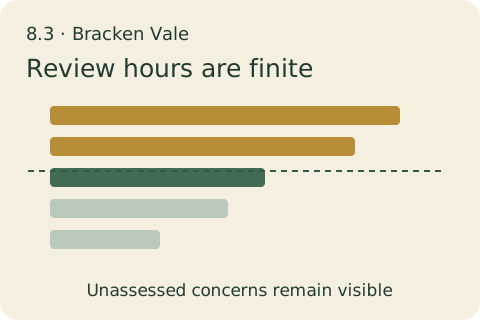
The concept. Priority is a claim about where to spend review effort; it never closes the underlying assurance need.
The construction. Eight source-linked concerns, mandatory escalation, transparent priority points, capacity-constrained allocation and reversible reasoned overrides.
Compare with: A consequence-and-evidence review register with named judgements. Still open: Explicit rules do not provide validated NLP assurance. Severe-case recall, real review quality and human benefit remain untested.
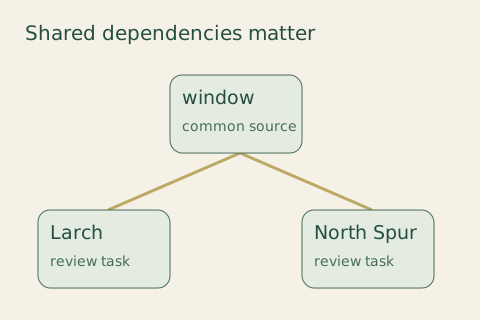
The concept. Risk can arise from combinations that are invisible in separate project registers.
The construction. Typed reachability, common-parent checks and strongly connected components expose candidate interactions; every path retains dated provenance and uncertainty.
Compare with: A dependency map with an explicit interaction register. Still open: Typed paths suggest interactions to investigate; they are not probabilities or established causes.
Connections without hidden changes
The trials share a fictional setting and project identifiers. Most hold independent local state. The evidence librarian, playbook guide, steering draft and gateway draft can explicitly exchange a source packet. Loading a changed packet keeps the old draft snapshot and makes its review stale. It does not advance the separate portfolio gate or authenticate a document.
Other workspaces make their own version boundaries explicit: a prompt’s output retains its inputs, a proposed task requires acceptance, and conflicting branch edits require a recorded choice. File exchange is local facilitation, not simultaneous shared editing. Browser saves and readable review files make the examples revisitable.
The role of AI
The public collection has no live model endpoint. Where a first version uses explicit rules, template assembly or a response recorded during this build, it is labelled accordingly. An imported output is not independently verified simply because it was saved or given a rating. The AI ambitions remain visible in the individual entries and coverage record.
This is a deliberate boundary of the public first versions. A fixed response cannot respond to new evidence. A keyword rule cannot judge every report. A synthetic learning exercise cannot replace a coach. The demonstrators let a reader inspect parts of those jobs without claiming that the hardest parts have been solved.
Methods and provenance
Most mechanisms here are newly authored teaching constructions. For sequential decisions, Warren Powell’s five-element formulation supplies the separation of state, decision, arriving information, transition and objective. Choosing it interprets the source outline’s unnamed “Princeton method”; it does not recover a hidden specification or validate our railway policy.
The accumulation discipline used in the dynamics tools follows the standard stock-and-flow distinction: changes to a stock must be accounted for by its flows. MIT’s stock-and-flow teaching exercise is a useful explanation. The particular equations, coefficients, datasets and intervention assumptions here are our own inventions, not sourced forecasts. Platform-specific recipe references are attached to the relevant recipe.
What the checks can establish
Each app has semantic tests of reference results and material failure cases. The dated verification record separates model checks, independent review, ordinary browser journeys and publication checks. The tests are about the mechanisms: retaining unknowns, respecting resource bounds, rejecting inconsistent imports, exposing conflicts, preserving source versions and supporting correction and reopening.
No observed human-use study, calibrated forecast, operating assurance or organisational return follows from those checks. The strongest result of this first essai is a collection of contestable constructions. Its remaining question is whether they earn their place in actual work.