
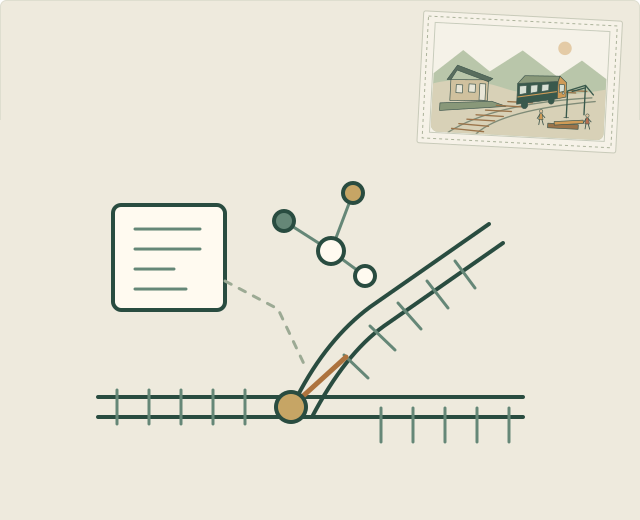
Essai 01 · 32 first versions
A good idea.
Now make it
useful.
One fictional railway. Thirty-two ways to examine its project work: decisions, relationships, learning, evidence and the effort of getting things done.
Each question opens a working example. Change something, inspect the result and judge what the extra structure adds.
Choose a question →
The situation behind the questions
Bracken Vale owns and renews railway infrastructure. Separate passenger and freight operators use it. The team must reconcile service, access, uncertainty and limited resources. The setting makes the questions concrete; every rule, figure, document and relationship is invented.
Uncertain condition, constrained resources and the timing of intervention.
Passenger needs, community commitments and temporary access.
Shared specialists, project interfaces and evidence before commitment.
Records, measures, learning and the work of changing practice.
One essai · one collection
Follow your question.
All 32 use cases now have a first version. Their numbers connect them to the original outline; they are not a sequence to work through.
Some are numerical models, some are evidence or learning tools. Where an AI ambition is illustrated by a recorded example or explicit rules, the tool says so. Functioning software is the start of investigating usefulness.
1.1 · Stakeholders
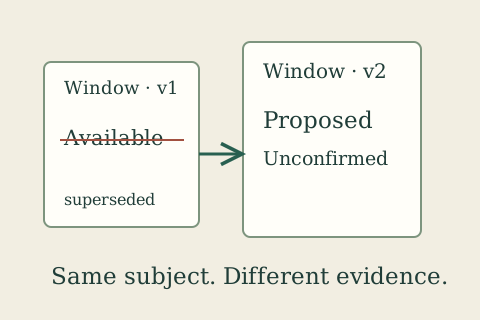
Which account applies?
Find a passage, inspect its version, and keep conflicting accounts in view.
Try the question →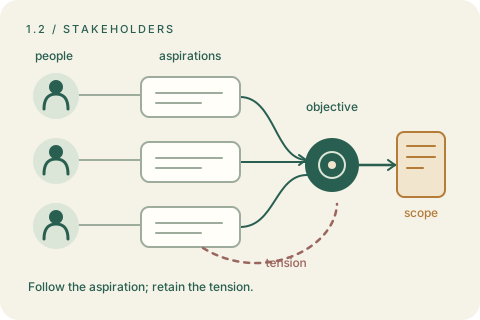
1.2 · Stakeholders
Whose outcome?
Trace stakeholder aspirations through objectives to proposed work, then change a judgement.
Try the question →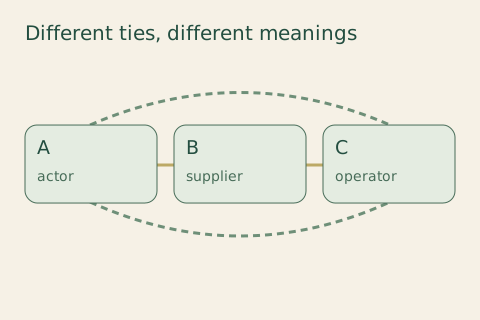
1.3 · Stakeholders
A connection has a kind
Keep agreements, alliances, affiliations and tensions distinct while comparing project neighbourhoods.
Try the question →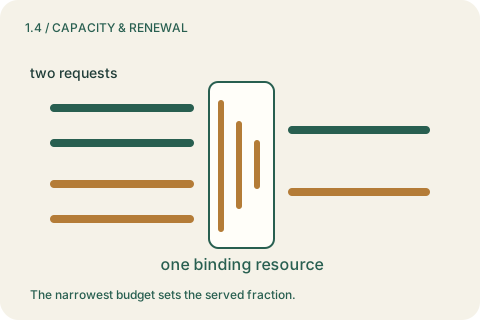
1.4 · Stakeholders
The constraint moves
Change demand, renewal and investment timing; see passenger and freight requests meet separate resource limits.
Try the question →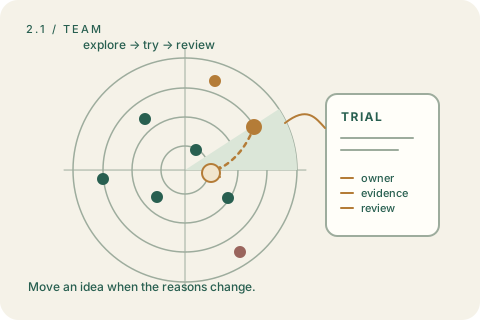
2.1 · Team
A trial worth having
Nominate an office tool, record a trial and explain each change in adoption position.
Try the question →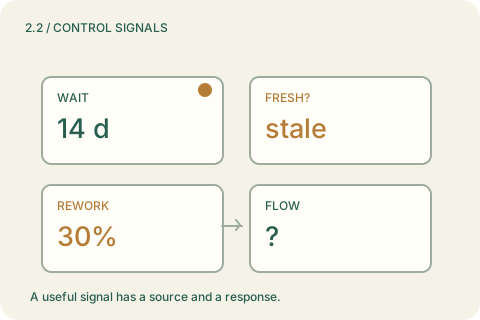
2.2 · Team
A signal worth seeing
Choose, inspect and tune project signals while retaining missing data and the reasons for dismissal.
Try the question →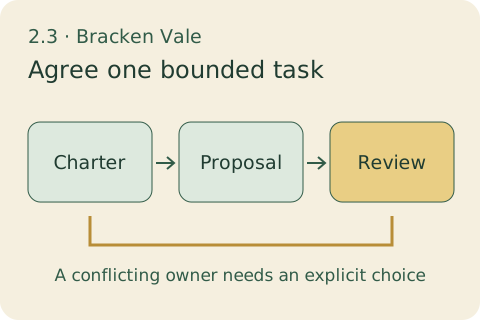
2.3 · Team
Small enough to agree
Edit a bounded brief, review suggested tasks and resolve conflicting versions explicitly.
Try the question →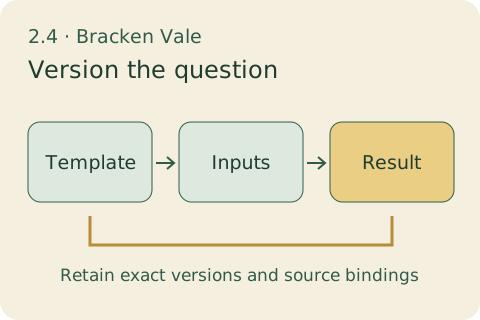
2.4 · Team
Keep the recipe
Fill and version a prompt, attach an output and keep its evaluation tied to the exact inputs.
Try the question →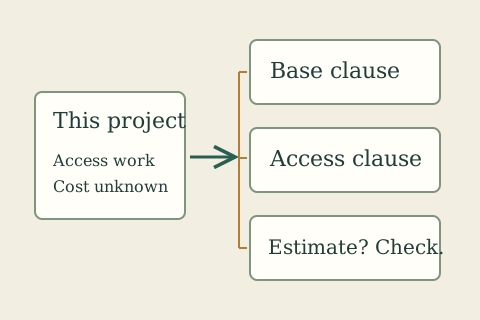
3.1 · Development approach
What applies here?
Tailor a small playbook to the project context and expose uncertain applicability.
Try the question →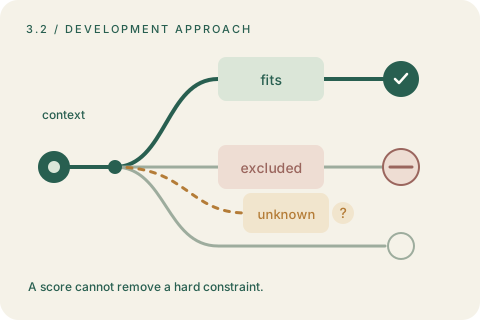
3.2 · Development approach
A route that fits
Compare four invented delivery approaches while keeping hard constraints and unknown answers visible.
Try the question →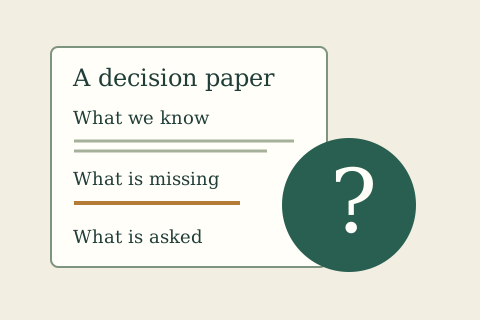
3.3 · Development approach
A meeting with a decision
Assemble a source-linked draft, edit it, and see when changed evidence invalidates its review.
Try the question →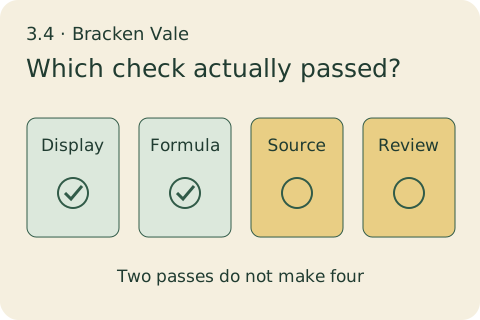
3.4 · Development approach
Checked in what sense?
Compare candidate outputs while keeping calculation, source and human checks separate.
Try the question →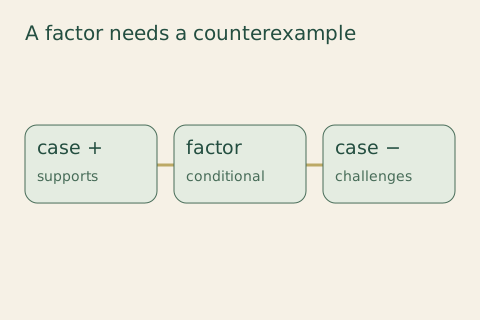
4.1 · Planning
Useful elsewhere?
Read supporting and contradictory cases before judging whether a factor belongs in your plan.
Try the question →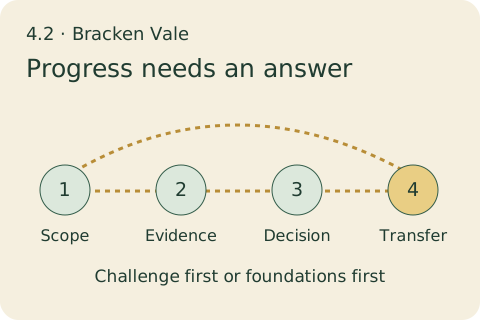
4.2 · Planning
Learn from the case
Try project decisions at different experience levels and let demonstrated answers shape the learning route.
Try the question →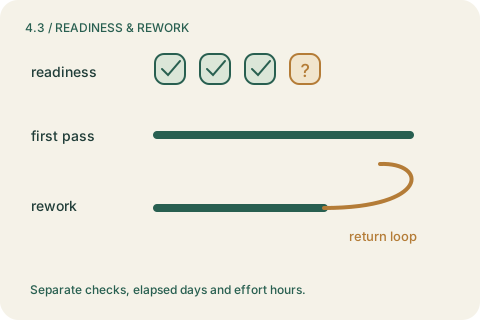
4.3 · Planning
Ready on the first pass?
Separate preparation, planned waiting and rework; inspect the cohort behind an estimate range.
Try the question →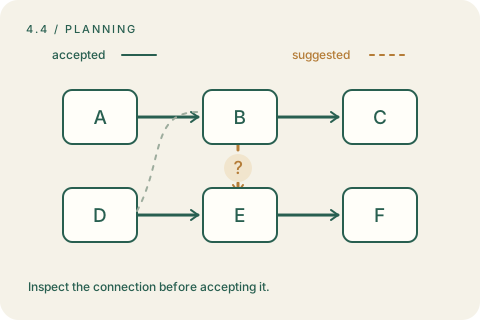
4.4 · Planning
The missing link
Review suggested dependencies without silently changing the accepted network.
Try the question →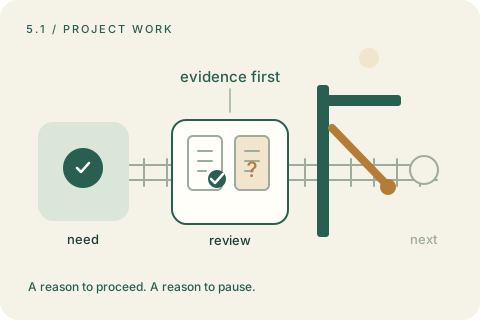
5.1 · Project work
A gate with reasons
Try a portfolio transition, inspect what is missing, and add evidence before trying again.
Try the question →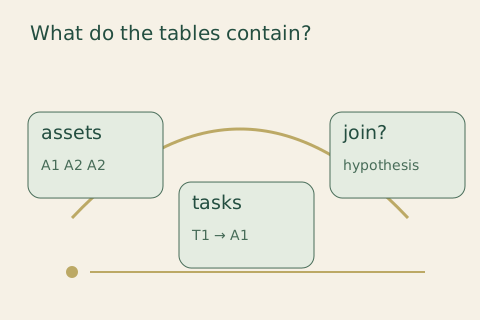
5.2 · Project work
What is in the tables?
Profile rows, expose missing or inconsistent values and review possible joins before accepting them.
Try the question →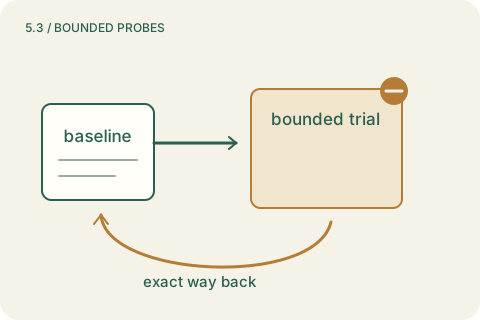
5.3 · Project work
Make retreat possible
Set a bounded office trial, preserve its baseline and test the stop-and-fallback logic.
Try the question →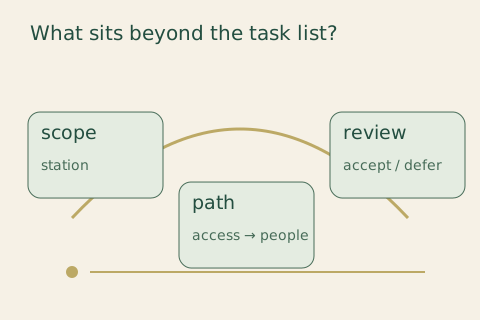
5.4 · Project work
What did the task list miss?
Follow a small typed vocabulary from chosen scope to suggested context, then accept, defer or reject.
Try the question →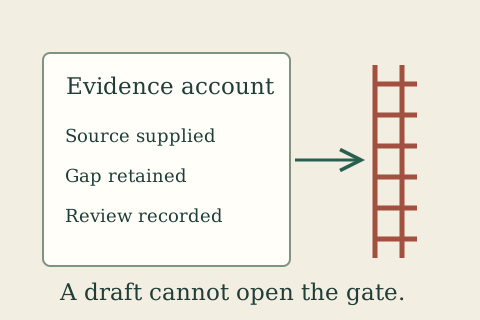
6.1 · Delivery
A draft is not a gate
Prepare a gate-specific draft while keeping missing evidence separate from approval.
Try the question →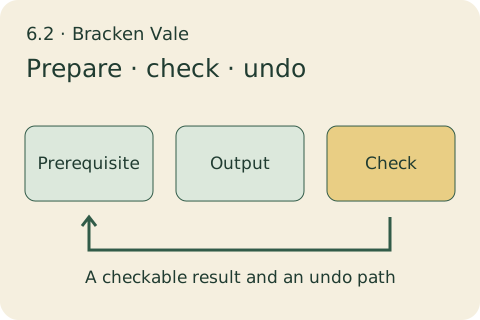
6.2 · Delivery
Try one office job
Work through a bounded automation recipe with prerequisites and a checkable practice output.
Try the question →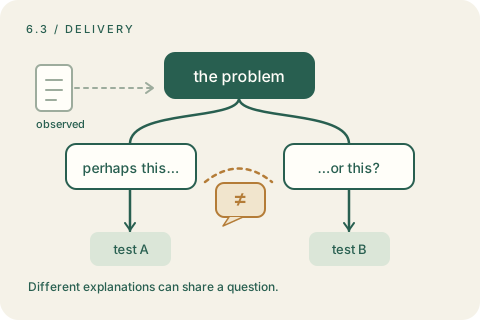
6.3 · Delivery
Keep the disagreement
Connect problems, evidence, explanations and interventions without erasing contrary views.
Try the question →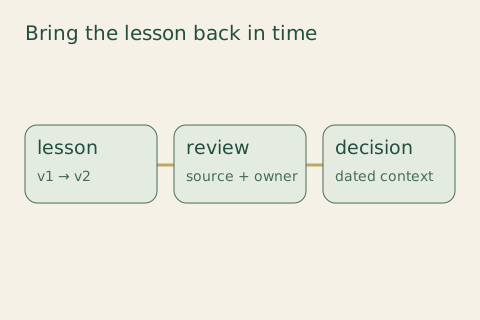
6.4 · Delivery
Remember before deciding
Capture and version lessons, inspect why they match an upcoming decision and record a response.
Try the question →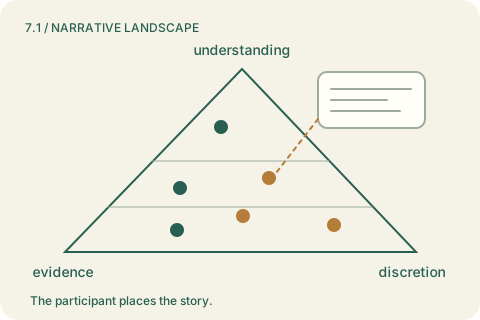
7.1 · Measurement
Find the story in the pattern
Position a narrative between three dimensions, compare cohorts and return to the underlying account.
Try the question →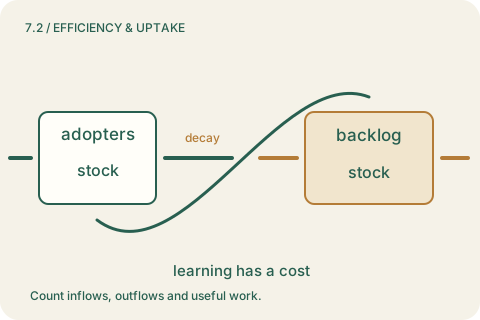
7.2 · Measurement
The work of getting better
Compare team adoption, backlog and useful-hour trajectories with assumptions kept visible.
Try the question →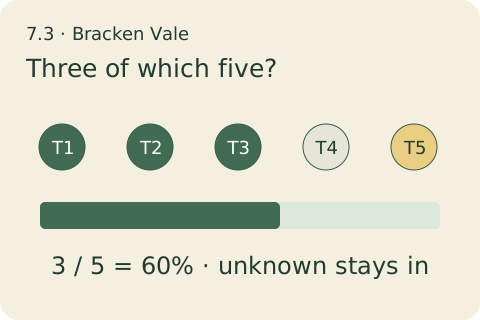
7.3 · Measurement
Practise on the artefact
Edit a project canvas, inspect its data and correct a denominator using the actual records.
Try the question →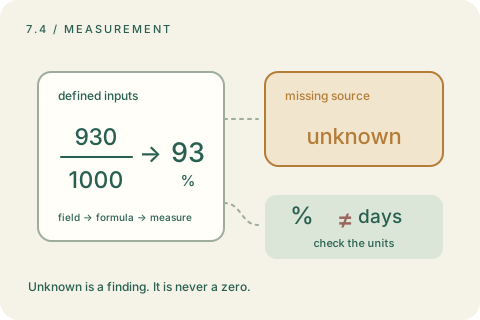
7.4 · Measurement
What does that number mean?
Inspect metric definitions and relationships; expose unknown values and incompatible comparisons.
Try the question →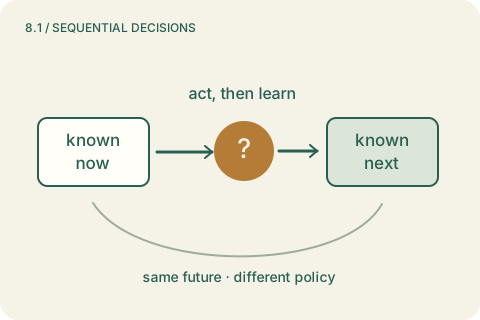
8.1 · Uncertainty
Know now, act later?
Act on the information available now and compare explicit policies on the same scenarios.
Try the question →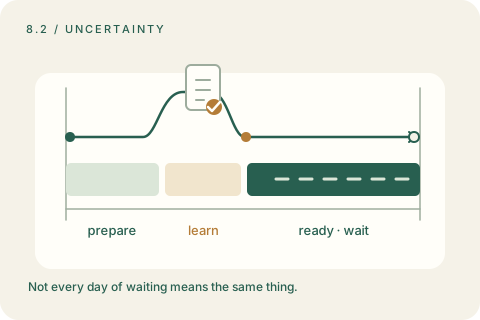
8.2 · Uncertainty
The shape of waiting
Separate preparation and deliberate information gathering from time ready to decide.
Try the question →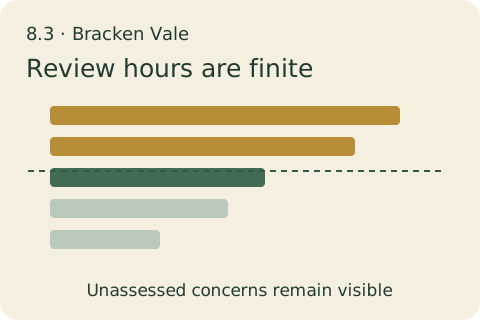
8.3 · Uncertainty
Spend attention carefully
Inspect an explainable assurance queue, change review capacity and record a reasoned override.
Try the question →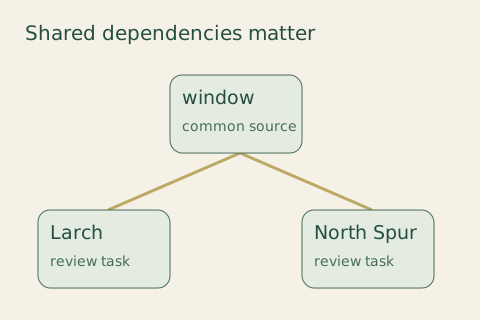
8.4 · Uncertainty
The shared dependency
Trace typed task, event and supplier connections to reveal interaction hypotheses for investigation.
Try the question →The result of this essai
Working is the
beginning of useful.
The first-version collection is complete. It gives each proposed intervention a mechanism, an example and limits that can be examined. It does not establish that every tool improves work or deserves to become a product.
What matters next is what a person notices, decides or achieves—and the preparation, checking and maintenance that requires. The essai explains the constructions and the remaining questions.
