About
A personal space for exploring and explaining how projects work, with experiments and examples shared for learning—not offered as commercial services.
I'm Lawrence Rowland. I use small scenarios—a farm lane, a mountain refuge or a wildlife crossing—to explore ideas about work, resources, decisions and how systems fit together. AI helps me build and explore; making the ideas understandable and inspectable is part of the work.
These public experiments bring together sources, visible models and their limits. A working demonstration is not proof that a method will work on a real project. My employment and client work are outside the scope of this collection.
Colophon
This site is a collaboration with GPT-6. Earlier OpenAI models helped develop its ideas and prototypes, with some support from Claude. I choose the questions and sources, shape the examples, and work with the models to build, test and explain them.
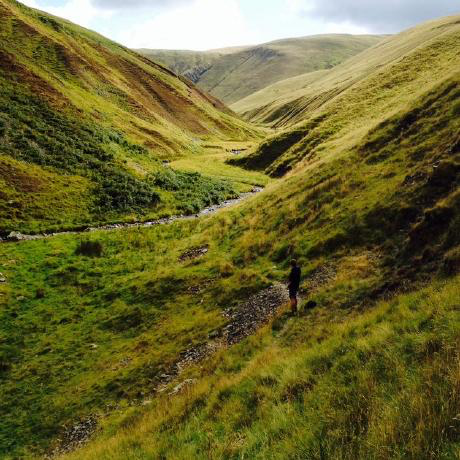
The Howgills photograph in the header is my colophon, linking back to this account of how the collection is made.
Privacy and optional analytics
Analytics is off unless you enable it. If enabled, Google Analytics uses a browser identifier to count visits and receives the page's published address plus standard browser and network information. Advertising features and automatic tracking of searches, forms, downloads and videos are disabled. We do not send anything you type into the apps, URL queries or fragments.
Your choice is stored in this browser for up to six months and applies to pages here that offer these controls. Use the Analytics control at the bottom right to change your choice at any time. Turning it off stops future collection and removes this site's analytics cookies. Earlier data already sent is not erased. External services you choose to open have their own privacy settings.
The site's earlier purpose
The site began as a collection of tools and frameworks for project portfolio management. This earlier purpose remains background to the current experiments.
Portfolio management background
Purpose and description
The aim was to help portfolio managers choose frameworks for different business challenges and use them to set up and deliver projects, programmes and portfolios. Alongside conventional project management, the collection explored machine learning, natural language understanding and graph databases, using no-code or low-code examples that managers could apply directly.
Lessons from each project and portfolio were intended to feed back into the frameworks.
Using the material
Individual examples link to repositories that can be downloaded or cloned for use and modification. Check each repository's licence and source terms before reuse.
Motivation
Open-source generosity has helped me learn and work better. Sharing frameworks that have worked for me also lets me learn from how others apply and extend them.
Project management remains as much art as science: people and teams, consensus, stories, incentives and unintended consequences all matter. Tools and frameworks only do so much.
Building and rebuilding useful frameworks can reduce time spent on project mechanics, leaving more attention for the company, the portfolio's context and the conversation or approach that gives it a chance to succeed.
Earlier interests in AI and project management
Methods, experiments and frameworks
AI-assisted project methods
- GPTs as low-code tools, including custom GPTs with project knowledge
- AI-augmented communication and documentation
- Retrieval-Augmented Generation (RAG) for document use
- AI agents with defined project roles, such as risk analyst
Experiments
- GPT-to-GPT collaboration on project strategy and literature
- Role-based agents simulating project team interactions
- Asynchronous “thinking” agents
- Ontology-driven app building with AI coders
Frameworks and predictions
- Project GPT Framework: AI-augmented team models
- Thinker and Builder agents: a classification for delegation
- AI Flywheel: compounding learning through early adoption
- Making project management tools more accessible through AI
Principles for running projects with AI
Treat AI as a collaborator, retain human judgement, experiment, widen access, prioritise knowledge flow, and focus on value. Transparency and validation underpin that approach.
Publications and media
- Substack: Experiment in AI
- LinkedIn series: Daily AI Project Tips
- Interviews: Project Chatter Podcast and MPA Podcast
Contact
To discuss an experiment, suggest an improvement or report a correction, raise an issue in its linked GitHub repository.